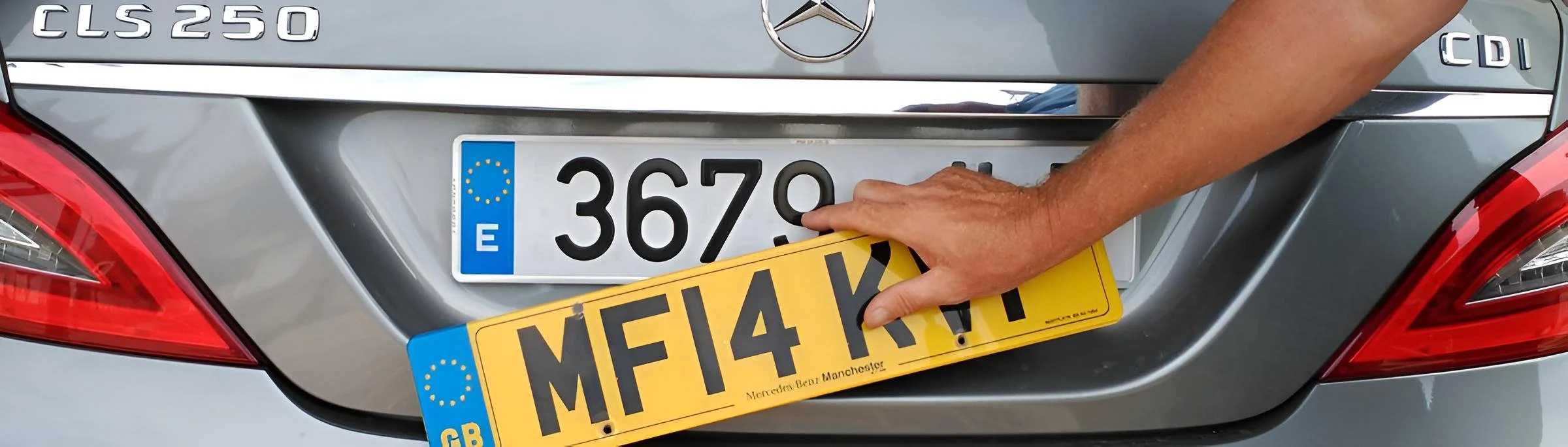
Different Types of Spanish Number Plates
Most Spanish number plates are white with black lettering, but you may also see green, blue, red, white and even crimson plates on Spanish roads.
Each colour and prefix has a specific purpose, from temporary import plates and taxis to trailers, agricultural vehicles, diplomatic vehicles and official state use.
Why Are There Different Plate Colours?
Spanish number plate colours help identify the type of vehicle, its legal status or the purpose for which it is being used.
For example, a green plate may indicate a temporary import plate, while a blue rear plate usually identifies a licensed taxi or private hire vehicle.
Do All Plates Mean the Same Thing?
No. The colour is important, but the letters and prefixes are also essential. Some plates look similar but have completely different meanings depending on whether they start with letters such as P, R, E, CD, CC or OI.
This guide explains the main types you are likely to see on Spanish roads.
Common Types of Spanish Number Plates
Below are the main Spanish number plate types, what they are used for and how you can usually recognise them.
Temporary Import Plates
Green plates with white letters and numbers are usually temporary import plates, commonly known as Placas Verdes.
They are normally prefixed with the letter P for provisional and are often used while a foreign registered vehicle is being imported and registered onto Spanish plates.
Learn more about green platesConsular Plates
Some green plates are used for consular vehicles. These are less commonly seen and are usually identified by the prefix CC.
Although they share the green and white colour combination, they are different from the temporary import plates normally used during vehicle registration.
Taxis and Private Hire Vehicles
Blue plates with white lettering are used on the rear of licensed taxis, limousines and vehicles hired with a driver.
The blue taxi plate helps identify properly licensed vehicles and makes them easier to recognise on Spanish roads.
International Organisation Plates
Blue plates may also be seen on diplomatic or official vehicles belonging to international organisations.
These plates are normally prefixed with the letters OI, which helps distinguish them from taxi and private hire plates.
Trade and Special Plates
Red plates with white text are often used as trade or special plates and are commonly prefixed with the letter S.
These are not ordinary registration plates and are generally linked to specific permitted uses.
Diplomatic Plates
Some red plates with white lettering are used for diplomatic vehicles.
These are usually identified by the prefix CD, which refers to diplomatic corps vehicles.
Trailer Plates
Red plates with black lettering are used on larger trailers and are prefixed with the letter R for Remolque.
These are separate from the towing vehicle’s normal registration plates and identify the trailer itself.
Agricultural and Machinery Plates
White plates with red lettering are used for certain agricultural vehicles and heavy machinery.
These plates are normally prefixed with the letter E.
Standard Spanish Plates
The most common Spanish number plate is the standard white plate with black lettering. This is the plate format you will see on most cars, motorcycles, vans and motorhomes in Spain.
Standard Vehicles
Most ordinary Spanish registered vehicles use a white background with black letters and numbers, normally in the format four numbers followed by three letters.
Historic Vehicles
Historic vehicles may use a white plate with black lettering and are usually identified by the prefix H.
State and Official Plates
Spain also has a number of official state and government vehicle plates. These are often recognised by specific prefixes linked to public bodies or state services.
Examples include prefixes used for police, Guardia Civil, military, regional police forces and official state vehicles.
Examples You May See
You may have seen prefixes such as DGP on Spanish police vehicles, which refers to the Dirección General de Policía.
Other examples include prefixes used by the Guardia Civil, National Police, regional police forces, the Spanish Air Force and other state bodies.
Crimson Royal Plates
Perhaps the most unique number plate in Spain is the crimson plate bearing the Royal Crown.
These plates are associated with vehicles carrying the King of Spain during official engagements and are not available for ordinary vehicle use.
Not a Royal?
We can’t get you a crimson number plate, but we can still promise you a royal level of service when importing or registering your vehicle in Spain.
Which Plates Can We Help With?
At Car Registrations Spain, we mainly help customers with standard Spanish plates, temporary import plates, historic registrations, trailer registrations, ITV requirements and vehicle import paperwork.
Importing a Foreign Vehicle?
If you are importing a UK, EU or other foreign registered vehicle into Spain, you will normally need to complete the registration process before the vehicle can be issued with ordinary Spanish number plates.
In some cases, temporary green plates may be useful while the import process is underway.
Need Replacement Plates?
We are a DGT-licensed Spanish number plate maker and can supply replacement Spanish plates where required.
If you are unsure what type of plate you need, our team can advise you based on your vehicle and circumstances.
Let Us Help You Get the Right Plates for Your Vehicle
Whether you need to import a vehicle, arrange temporary green plates, register a classic vehicle or replace existing Spanish plates, our team can help.