Deciphering Tyre Codes
You may have wondered what all the writing and codes on your car tyres actually mean. Understanding these markings is essential for safety, performance, and ensuring your tyres meet legal requirements in Spain and across Europe.
Understanding a Typical Tyre Marking
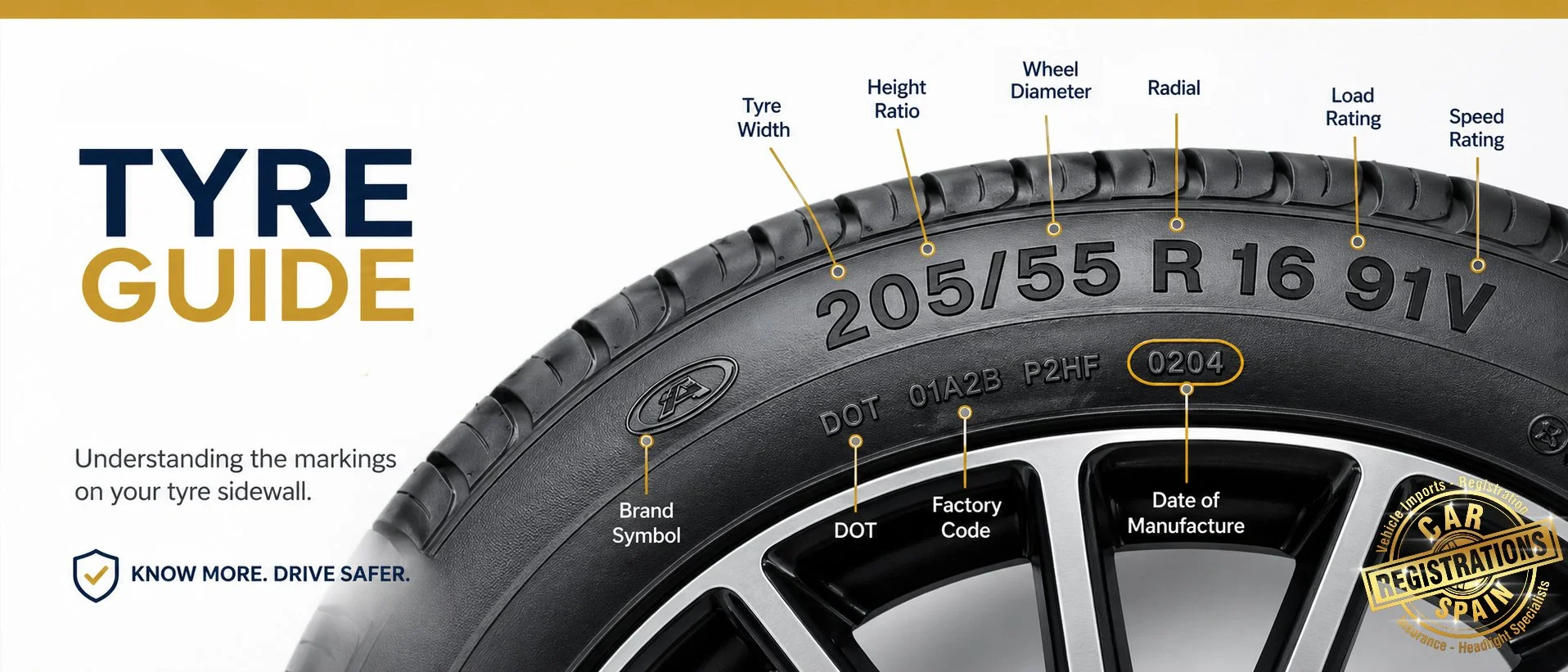
205/55 R16 91V
This is a common European tyre size. Each section tells you something important about the tyre.
Tyre Width
The 3-digit tyre width is the nominal measurement from sidewall to sidewall in millimetres, taken at the widest point of the tyre (excluding writing and kerbing rib).
Example: 205 = 205 mm wide
Height Ratio (Aspect Ratio)
This tells you how tall the tyre is as a percentage of the width. In our example it is 55% of 205 mm, which equals approximately 112.75 mm.
Radial Construction
“R” indicates the tyre is Radial — the standard construction for almost all modern passenger vehicle tyres.
Wheel Diameter
The diameter code shows the wheel size in inches that the tyre is designed to fit. Our example tyre fits 16-inch diameter wheels.
Load Rating (Load Index)
This numerical code tells you the maximum weight the tyre can safely carry. A load rating of 91 equals 615 kg per tyre. Always check the table for your specific rating.
Speed Rating
The letter code indicates the maximum sustained speed the tyre can handle when fully loaded. “V” in our example = up to 149 mph (240 km/h).
Other Important Markings
DOT Code
Department of Transport approval. Contains factory code, tyre size info, and manufacturing date (week + year). Example: manufactured in week 02 of 2004.
ECE Regulation 30
All UK and European tyres must carry an “E” mark showing compliance with European safety standards. “E4” means approved in Holland.
Factory Code: Identifies the manufacturing plant (usually searchable online).
Other common markings: RF (Run Flat), M+S (Mud & Snow), 3PMSF (Three Peak Mountain Snow Flake symbol for winter tyres).
Tread Wear Indicators
Tyres have built-in tread wear indicators (small raised bars in the tread grooves). The legal minimum tread depth in the UK and Europe is 1.6 mm across the central three-quarters of the tyre.
For safety, experts strongly recommend replacing tyres before they reach 3 mm tread depth.
Why It Matters in Spain
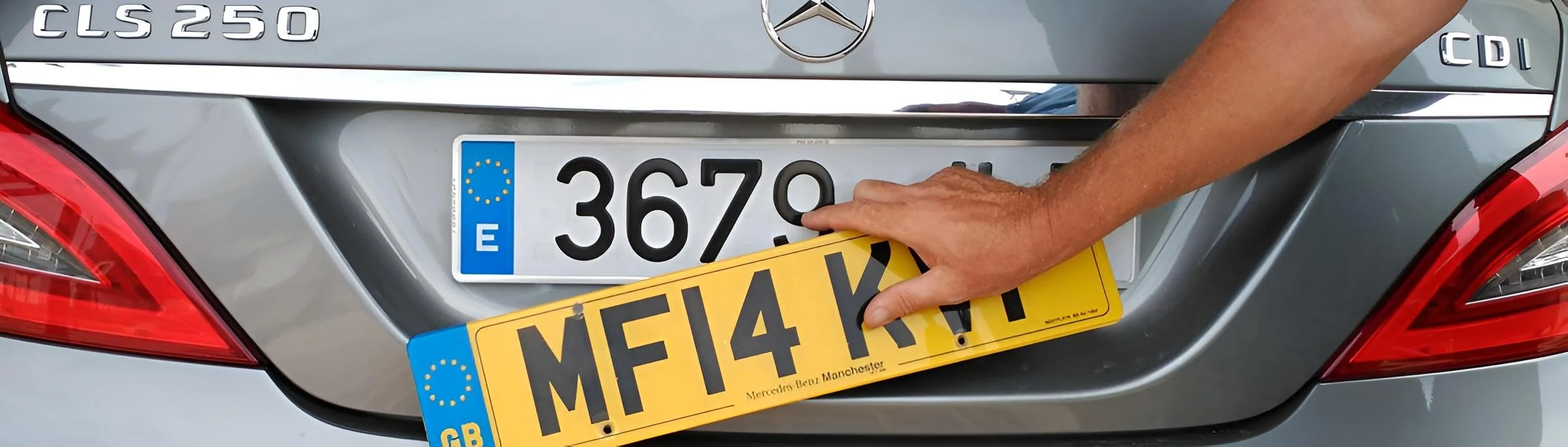
Correct tyres are part of your vehicle’s ITV (technical inspection) requirements. Incorrect or worn tyres can lead to failure, fines, or problems during registration onto Spanish plates.
Need Help with Your Vehicle?
Whether you’re importing a car or simply preparing it for Spanish registration and ITV, our team can advise on all technical aspects including tyres.
Let Us Help You Get Road Legal in Spain
Contact us today for expert advice on vehicle compliance, tyre requirements, and the full import & registration process.