Motorways in Spain: Autopistas, Autovías & Toll Roads
Spain has an excellent motorway network, but the different road names, toll systems, exit numbers and marker boards can be confusing if you are not used to driving here.
This simple guide explains the difference between autopistas and autovías, how Spanish motorway junctions are numbered, what kilometre markers mean, and what to look out for when planning a journey.
Autovías: Usually Free Motorways
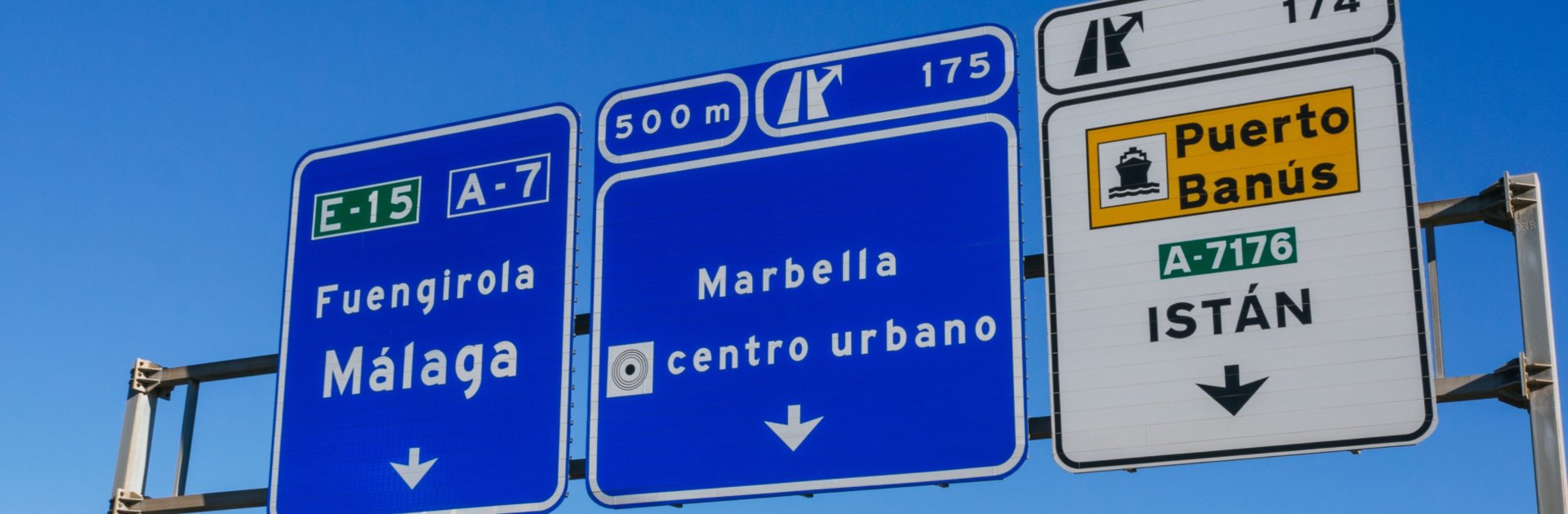
Roads beginning with A, such as the A-7, are normally autovías. These are usually free to use and are funded through general taxation.
They are often very similar to motorways, although some sections may have more junctions, service roads, slip roads, roundabouts or local access points than a traditional toll motorway.
Autopistas: Often Toll Roads
Roads beginning with AP are generally autopistas. Many of these were originally built as toll roads, although some sections in Spain are now toll-free.
Autopistas are usually designed for faster long-distance travel, with controlled access, fewer junctions and a higher motorway standard.
Quick Difference Between A Roads and AP Roads
As a general guide, the road prefix gives you a useful clue about the type of road you are using.
Autovía
Usually free to use, often with more junctions and more local access. These are the most common high-speed roads used by many drivers in Spain.
Autopista
Traditionally toll motorways, often designed for smoother long-distance travel with fewer interruptions and controlled access points.
However, road charging can change over time, so it is always sensible to check your route before travelling if you want to avoid tolls.
How Toll Roads Work
On some toll roads, you collect a ticket when you enter and pay when you leave. On others, you pay at a fixed toll point along the route.
Payment is normally possible by card, and some toll roads also accept cash. Frequent users may choose an electronic toll device such as Via-T, which allows faster passage through compatible lanes.
Planning Your Route
Most navigation apps allow you to choose whether to avoid toll roads, which can be useful if you are trying to keep costs down.
Bear in mind that avoiding tolls can sometimes add extra distance, time, roundabouts or slower roads to your journey.
Junction Numbering on Spanish Motorways
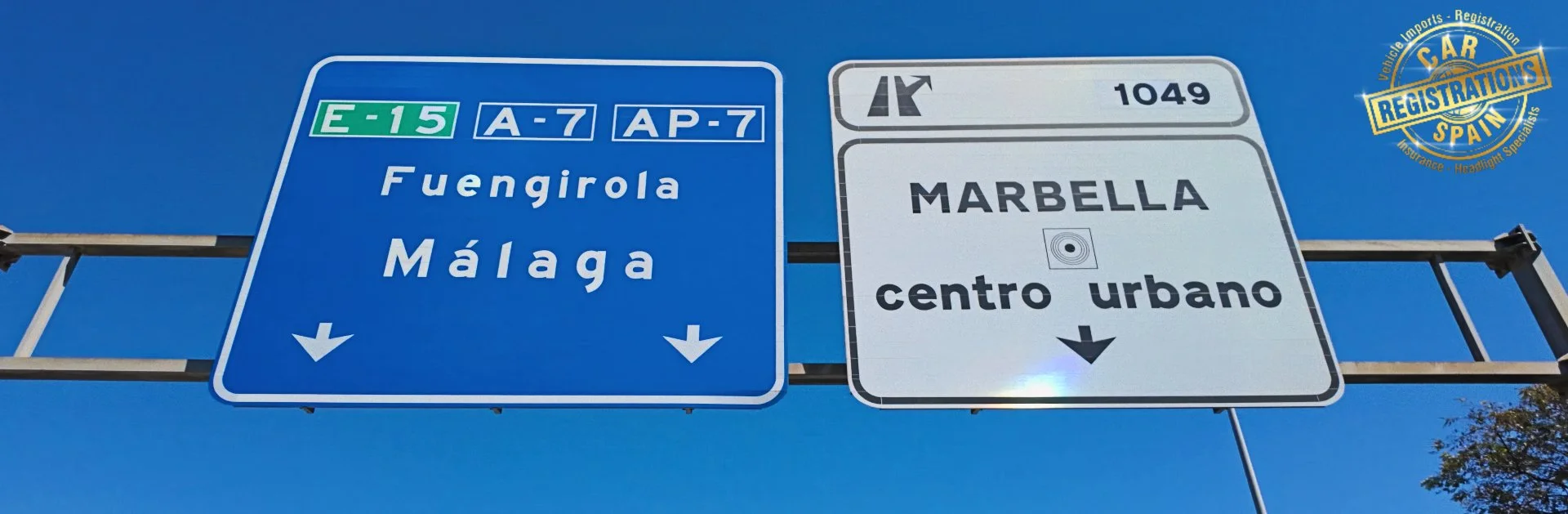
Spanish motorway exits are usually marked with the word Salida, which means exit.
Sequential Exit Numbers
Some roads number their exits in order, such as Salida 1, Salida 2, Salida 3 and so on.
Kilometre-Based Numbers
Many Spanish roads use kilometre-based numbering, where the exit number relates to the kilometre point on that road.
For example, Salida 67 may mean the exit is around kilometre 67 of that particular road. This can be very useful when describing your location or following directions.
Motorway Marker Boards
Along Spanish motorways, you will see small marker boards showing the road number and kilometre point.
These are useful if you break down, witness an accident, need assistance, or want to explain your exact location to a recovery company or emergency service.
Emergency Markers and SOS Points
Some roads also have emergency marker boards, SOS points, tunnel signs or other infrastructure markers.
If you need help, quote the road number, direction of travel and nearest kilometre marker whenever possible.
Useful Spanish Motorway Words
These are some of the most common words and signs you may see when driving on Spanish motorways:
Exit
Toll
Lane
Diversion
Service area
Joining traffic
Tips for Driving on Spanish Motorways
Keep to the right unless overtaking, watch for vehicles joining from slip roads, and pay attention to speed limit changes around tunnels, roadworks and urban areas.
Spanish motorway driving is generally straightforward, but the road layout can change quickly around cities and busy coastal areas.
If You Break Down
Move to a safe place if you can, use your approved emergency warning equipment, and keep well away from moving traffic.
When calling for help, provide your road number, direction of travel and the nearest kilometre marker.
Before a Long Journey
Before travelling a long distance in Spain, it is worth checking your route, fuel or charging stops, toll sections and traffic conditions.
Check the Route
Decide whether you want the fastest route or whether you prefer to avoid toll roads.
Plan Stops
Service areas can be spread out on some routes, so plan fuel, charging, food and rest stops in advance.
Carry Payment Options
If your journey uses toll roads, have a bank card available and carry some cash as a backup.
Know Your Location
Pay attention to the road number and kilometre markers, especially on unfamiliar routes.
We Help Drivers Across Spain Every Day
Car Registrations Spain can help with vehicle imports, Spanish number plates, ownership transfers, road tax, insurance and practical advice for driving legally in Spain.